

Read the original research article here:
https://onlinelibrary.wiley.com/doi/10.1002/poi3.419
cited as: Chen, X., Zheng, P., & Mou, J. (2025). Understanding Chinese Internet users’ information sensitivity in big data and artificial intelligence era. Policy & Internet, 17(1), e419.
Authors:
Xi Chen, Department of Management Science, Yunnan University, China.
Pengxin Zheng, Department of Management Science, Yunnan University, China.
Jian Mou, School of Business, Pusan National University, South Korea.
Editor:
Wenjia Tang, Media and Communications, University of Sydney, Australia
The widespread use of big data and intelligent recommendation algorithms has led to excessive collection of user data. This has become a growing concern for Internet users. As more people question the boundaries of collecting and using user data on platforms, we hereby introduce a research paper examines Chinese Internet users’ information sensitivity. It treats information sensitivity as an indicator of data classification governance.
This study focuses on changes in the Internet environment driven by big data and AI. It looks at how these changes affect users’ psychological perception and behavior. To explain this process, it applies P-E fit theory. Specifically, it uses information sensitivity as an indicator of P-E fit to understand how individuals adjust to shifts in the Internet environment. Based on empirical findings and comparisons with previous studies, the research validates the explanatory power of user information sensitivity as a dimension of P-E fit. This forms its main theoretical contribution.
From the perspective of P-E fit, the study also explores why sensitivity toward specific information items differs from findings in Western literature. At the level of personal habits, cultural factors play an important role. Chinese culture emphasizes self-restraint, modest behavior, humility in communication, and the pursuit of surface harmony in interpersonal interactions. As a result, individuals often adopt a reserved attitude and show reluctance to disclose personal information in public settings.
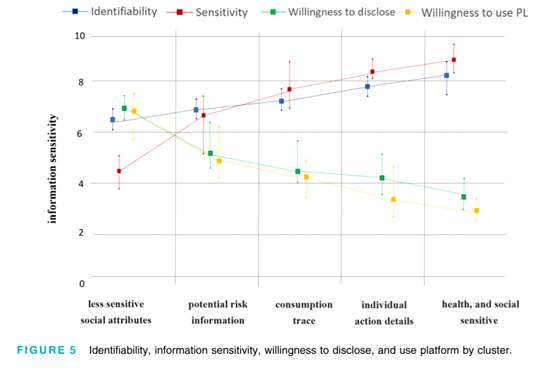
Comparativly, Western cultures are generally associated with stronger individualism. On social media, Western users tend to engage more in self-affirmation. They are also more willing to share self-enhancing information. These cultural differences help explain the mismatch in information sensitivity observed between Chinese users and Western contexts.
The study further examines the issue at the policy environment level. It argues that differences in perceptions of sensitive information and risk beliefs are shaped by national Internet governance policies and systems. In the early stages of the Chinese Internet, before the comprehensive implementation of RNS, online anonymity allowed individuals to express suppressed desires for information sharing. This was especially significant given introverted cultural tendencies.
However, with the gradual enforcement of full RNS policies, online anonymity has decreased. Online and offline activities have become more closely connected. At the same time, disclosure culture has extended from offline to online spaces. Additional measures, such as requiring the disclosure of the speaker’s IP address, have further heightened information sensitivity. These policies have also reduced users’ willingness to disclose personal information. The rising information sensitivity among Chinese users aligns with the study’s findings and reflects the changing dynamics of information disclosure in the digital age.
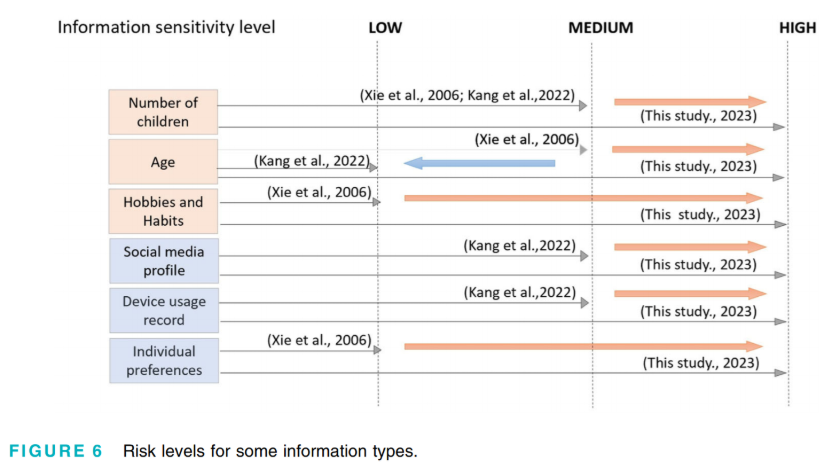
Data collection policies and systems in different countries are shaped by their international positions and cultural backgrounds. In Western contexts, digital sovereignty is receiving increasing attention as a way to reflect local cultures and user nuances. In Chinese culture, individuals tend to support and comply with governing policies. Although China differs from Western countries in cultural background and governance systems, both face common challenges in the digital age, including data sovereignty. For this reason, the research findings offer an important reference point for Western countries.
Know more about our authors:
Xi Chen is a professor in management science department, Yunnan University, with a doctoral degree focused in management science and bachelor’s degree in computer science from Beijing University of Posts and Telecommunications, China. She has led National Social Science Foundation projects in the field of Internet information security and digital society governance, social media and internet user behavior, and published more than 40 peer reviewed papers.
Pengxin Zheng is a research assistant in the department of management science, Yunnan University, China, specializing in internet information management and digital innovation. He is a key participant in the National Social Science Foundation project “Anonymity and Privacy Security in the Cyber Society.” His research interests include information security and internet user behavior.
Jian Mou is a professor in the School of Business at Pusan National University, South Korea. His research interests include online security, social media, trust and risk issues in e-service, and information management. He has published more than 80 papers in journals such as Technological Forecasting and Social Change, Journal of the Association for Information Systems, Information and Management, Internet Research, International Journal of Information Management,and Information Processing and Management.